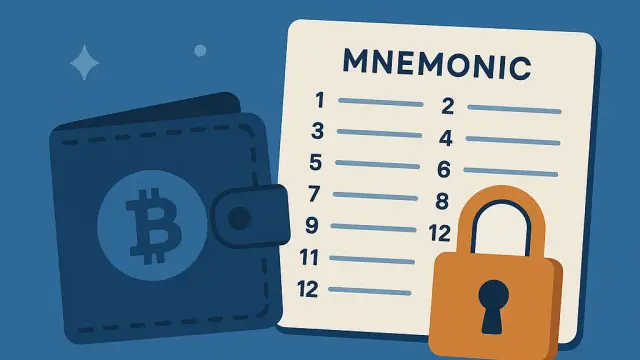
BIP Standards
Wallets from different vendors can restore each other's backups because they follow the same Bitcoin Improvement Proposals. BIP39 turns randomness into words, BIP32 turns the resulting seed into a tree of keys, and BIP44 and its successors fix where in that tree each coin and account lives. These articles explain each standard and how a proposal becomes one.
How BIP85 derives independent child seed phrases, passwords and keys from one master seed: the path scheme, a verified test vector, wallet support and risks.
What each number in a derivation path means, which paths Bitcoin and Ethereum wallets use, and why a restored wallet can show a zero balance.
SLIP-39 vs BIP39: how Shamir backup shares and thresholds work, why shares never convert to BIP39, which wallets restore them and when to use each.
BIP 110 (formerly BIP-444), the Reduced Data Temporary Softfork, proposed one-year limits on transaction data: its rules, the debate and why it is Closed.
BIP 157 lets light wallets fetch compact block filters (BIP 158) from full nodes and test them locally, finding their payments without revealing addresses.
BIP-44 defines the m/purpose'/coin_type'/account'/change/index path, letting a seed phrase manage accounts across coins like Bitcoin and Ethereum.
BIP 32 defines HD wallets: one seed derives a tree of keys via chain codes and hardened or normal steps, and an xpub makes addresses without private keys.
A BIP is a design document proposing a Bitcoin feature, standard or process. How BIP 3 statuses and types work, and all 78 Deployed BIPs linked to their specs.
All 22 printable explainers on this topic, including the PDF archive, newest first.
Learn how BIP380 defines key expressions in Bitcoin output descriptors, covering hex keys, WIF, xpubs, derivation paths, and script context rules.
BIP39 uses 2048 PBKDF2 rounds to resist passphrase guessing, while BIP32 relies on a single HMAC round for fast child key derivation.
Technical reference detailing non-BIP39 mnemonic phrase formats including Electrum, aezeed, Polyseed, and legacy Monero seeds.
Learn how to define spending conditions in rust-miniscript's policy language, compile to descriptors, and inspect execution costs.
Bitcoin Improvement Proposals cannot introduce breaking changes once deployed; fixes and alternative designs must publish under new proposal numbers.
Decentralized identity (DID) gives individuals cryptographic control over their digital credentials, removing dependence on centralized identity providers.
ERC-20 handles fungible tokens, ERC-721 enables unique NFTs, and ERC-1155 combines both in one efficient multi-token contract standard.
Taproot is a major Bitcoin upgrade that enhances privacy, efficiency, and smart contract capabilities by introducing new cryptographic signatures and transaction methods.
As blockchain technology continues to evolve, two concepts have become especially important for scalability and security: Layer 2 solutions and BIP-39.
In the world of blockchain and cryptocurrencies, two important concepts that often come up among developers and users are Testnet and BIP39.
A miner is a participant in a proof-of-work cryptocurrency network (like Bitcoin) whose job is to collect, verify, and bundle transactions into blocks.
BIP-39 maps 128–256 bits of entropy to a word list with a checksum.
BIP-39 is the industry standard that turns high-entropy randomness into a 12–24 word seed phrase you can use to recreate a non-custodial (self-custody) wallet and derive all its keys (via BIP-32/BIP-44).
Binance is one of the world's largest cryptocurrency exchanges, offering spot and derivatives markets, staking, and custodial wallets.
Behind the scenes, your wallet starts from a single seed and grows a tree of keys (hierarchical deterministic, or HD).
An educational dialogue on the critical role and security of BIP-39 seed phrases in self-custodied crypto systems.
Technical analysis and commentary on the enduring role of BIP-39 seed phrases in cryptocurrency security.